
Is Not Game Over
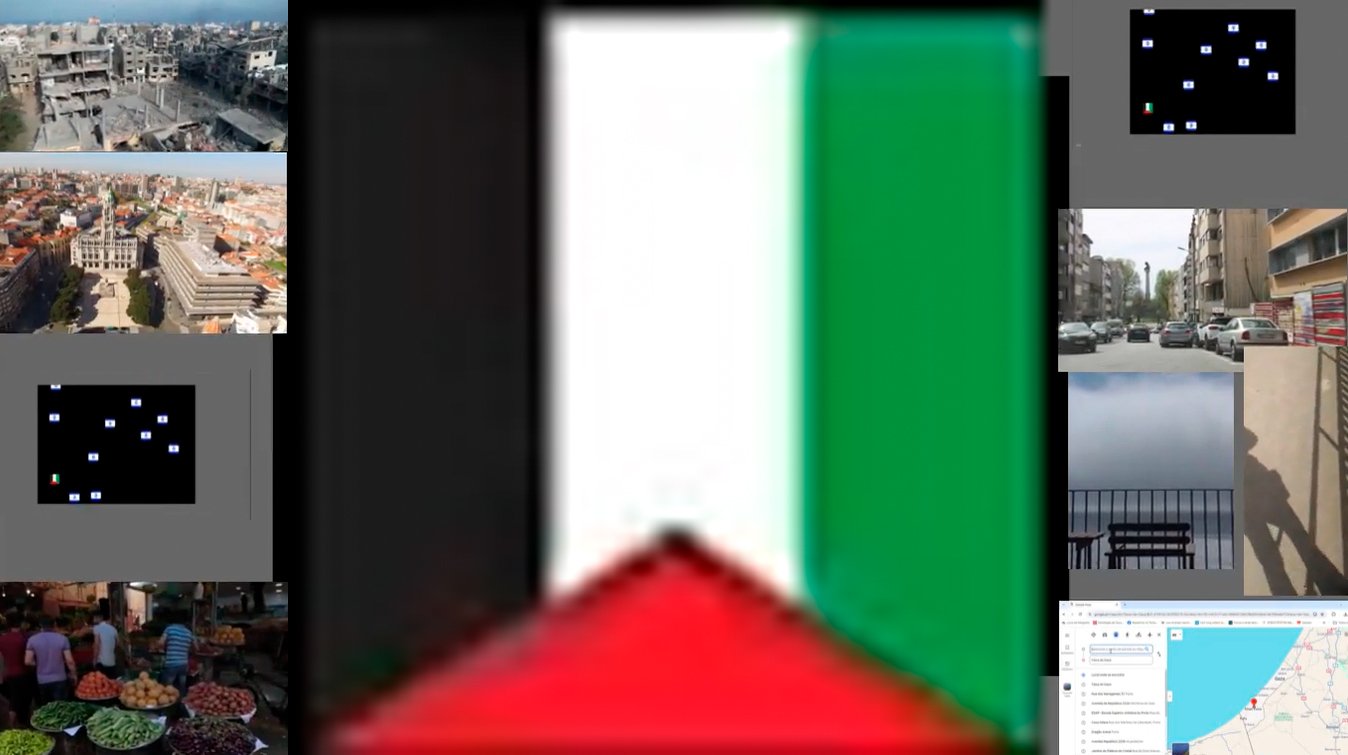
Vídeo-instalação desenvolvida a partir de colagem digital, captura de ecrã, refilmagem e montagem de imagens em múltiplos canais. O trabalho parte de um jogo digital construído pela artista durante o segundo semestre de 2024 com referências visuais às bandeiras da Palestina e israel. Durante a apresentação da instalação, o jogo permanecia acessível ao público em velocidade normal, permitindo sua utilização direta. Paralelamente, uma versão acelerada do jogo, era projetada em grande escala, transformando a lógica da jogabilidade em um fluxo contínuo e impossível de acompanhar. Paralelo a esta projeção, diferentes imagens coexistem simultaneamente: caminhadas cotidianas pelo Porto, Portugal, onde a artista reside, registros da faixa de Gaza antes e depois da destruição atual, imagens de drones e percursos traçados no Google Maps entre o Porto e a Faixa de Gaza.
O genocídio, a ocupação indevida de terras ocorre, sem a perspectiva de um fim e, em paralelo, a vida segue. É possível caminhar até Gaza, habitamos a mesma superfície. Lembremos que a Palestina e seu povo existem desde sempre e que o genocídio desse povo teve início em 1948, o Nakba, com o início da excecução do projeto de ocupação colonialista da Palestina pelos sionistas, num grande jogo político de poder e dinheiro.
O trabalho articula política, videogame, imagem documental, montagem digital e instalação audiovisual para investigar relações entre distância, mediação tecnológica, circulação de imagens e violência contemporânea.
Is Not Game Over
Video installation developed through digital collage, screen capture, re-filming, and the editing of images across multiple channels.
The work originates from a digital game created by the artist during the second semester of 2024, incorporating visual references to the flags of Palestine and israel. During the installation, the game remained accessible to the public at its normal speed, allowing direct interaction and gameplay.
Simultaneously, an accelerated version of the game was projected on a large scale, transforming the logic of gameplay into a continuous and impossible-to-follow flow. Alongside this projection, different images coexist simultaneously: everyday movement through Porto, Portugal, where the artist lives, visual records of the Gaza Strip before and after the current destruction, drone footage in Gaza, and routes traced on Google Maps between Porto, Porutgal, and the Gaza Strip.
Genocide and the unlawful occupation of land continue with no clear prospect of an end, while everyday life carries on in parallel. It is possible to walk to Gaza; we inhabit the same surface. Let us remember that Palestine and its people have existed for centuries, and that the genocide of the Palestinian people began in 1948 with the Nakba, marking the beginning of the implementation of a zionist colonial project in Palestine, embedded within a broader political game of power and money.
The work brings together politics, video games, documentary imagery, digital montage, and audiovisual installation to investigate relationships between distance, technological mediation, image circulation, and contemporary violence.